Few video games are easier to understand – or harder to master – than Tetris.
It began as a simple program created by a Soviet engineer in 1984. Five years later, Nintendo put it in the hands of millions of players around the world.
The goal is simple: Fit falling blocks together, clear complete rows and keep the pile from reaching the top.
It sounds easy enough. But as most of us know, the longer you survive in the game, the faster those blocks fall.
For decades, players thought Level 29 was about as far as anyone could go.
That was until 13-year-old Willis Gibson made it all the way to Level 157.
He did it in less than 39 minutes, racking up more than 6.8 million points – even though the scoreboard could display only 999,999.
Then the screen froze.
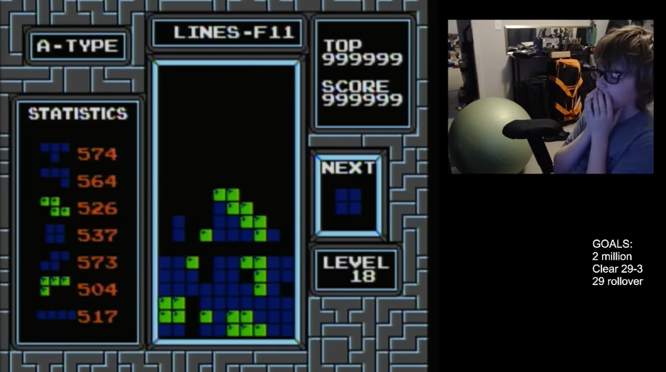
Source: YouTube
Gibson didn’t simply beat Tetris. He played it so well that the scoreboard could no longer keep up – and eventually, neither could the game.
Folks, NVIDIA Corporation (NVDA) has created a similar problem for Wall Street.
Quarter after quarter, analysts set what looks like an impossible bar. And the leader of the AI boom keeps finding a way to push the game to another level.
That’s why I call NVIDIA’s quarterly reports the grand finale of earnings season. A strong report gives Wall Street permission to stay bullish on the entire AI trade.
So, in today’s Market 360, let’s take a closer look at NVIDIA’s latest results. I’ll discuss why the number flashing on Wall Street’s screen is only part of the story and what those results tell us about where the next big AI opportunities are taking shape.
NVIDIA Just Cleared Another Level
NVIDIA didn’t just beat analysts’ expectations yesterday evening. It blew past them.
For its second quarter of fiscal 2027, revenue soared 106% year-over-year to $96.2 billion, topping analysts’ estimate of $92.18 billion. Earnings climbed 118% to $53.96 billion, or $2.22 per share. Analysts expected $2.09 per share, so NVIDIA posted a 6.2% earnings surprise.
Once again, the data center business was the real star. Revenue jumped 117% year-over-year to $89 billion, accounting for more than 90% of NVIDIA’s total sales.
And the outlook was even more impressive.
NVIDIA expects third-quarter revenue between $105.8 billion and $110.1 billion, putting the company on track for its first quarter with more than $100 billion in sales.
But the number that really got Wall Street excited?
Wall Street was expecting NVIDIA’s revenue growth to begin slowing down significantly next fiscal year. Instead, Chief Financial Officer Colette Kress said, “We expect to grow revenue by approximately 70% in fiscal 2028.” Analysts had been expecting growth of only about 45%.
Even more encouraging, management said that its outlook is being constrained by supply, particularly the ongoing memory chip shortage.
In other words, NVIDIA believes demand could support even faster growth.
NVIDIA isn’t struggling to find buyers. It is struggling to find enough components to fill its orders.
Folks, I didn’t expect it to be this good.
As CEO Jensen Huang put it, “The AI infrastructure build-out is at full steam.”
Wall Street clearly liked what it heard. NVDA surged on Thursday, and this time the number flashing on Wall Street’s screen more accurately reflected the real score.
NVIDIA Is Becoming the Banker of the AI Buildout
What’s interesting to me is that CEO Jensen Huang isn’t waiting for the bottlenecks in the AI buildout to be resolved.
The company has been aggressively expanding its reach across the AI ecosystem, helping finance, supply and shape the infrastructure needed to keep the boom moving.
I covered some of the company’s recent deals in a previous Market 360 article. But consider just a few new developments surrounding this earnings report:
- Amazon.com, Inc. (AMZN)and NVIDIA announced plans to add 2 million more NVIDIA GPUs across Amazon Web Services infrastructure in 2027 and 2028. That’s on top of the more than 1 million GPUs Amazon had already planned to deploy.
- NVIDIA continues to push deeper into the software side of AI. According to reports on Thursday, the company has agreed to acquire Hugging Face for $12.9 billion. This will give NVIDIA a much larger foothold in one of the most important open-source AI developer ecosystems.
- Space Exploration Technologies Corp. (SPCX) is deepening its relationship with NVIDIA, too. The company plans to use NVIDIA’s Vera CPUs and Vera Rubin platform to expand the infrastructure behind Grok, its AI model and assistant. It also plans to adapt that architecture for its first-generation Starmind AI satellite, bringing NVIDIA’s computing platform into orbit.
That’s why I increasingly think of NVIDIA as something more than the leading AI chip company.
It is becoming the banker, supplier and architect of the entire AI buildout.
And that makes Jensen Huang’s comments about accelerating demand even more important.
The AI Trade Is Back On
For nearly four months, AI stocks have been stuck in neutral as investors worried that the enormous wave of AI spending was finally starting to slow.
But NVIDIA may have just changed that.
As I’ve mentioned many times, Big Tech is spending a Gobsmacking amount of money on the AI buildout this year – about $800 billion, depending on who you ask.
But fears of spending slowdown percolated through markets and kept AI stocks sidelined for the past four months.
Those fears were instantly put to rest by the biggest company in the world on Thursday evening.
My colleague Luke Lango summed up the significance of the report nicely:
Instead of a slowdown, we’re going to see a re-acceleration next year. The AI trade is back on.
I agree.
If NVIDIA has just reawakened the AI trade after four quiet months, I don’t expect it to be the only company that benefits.
The growth NVIDIA just described requires an enormous supporting ecosystem.
AI data centers still need enormous amounts of power. They need chips and chip architectures. They need high-speed optical networking. They need specialized power-generation equipment. And they need systems capable of moving and protecting enormous amounts of data.
Those are exactly the kinds of opportunities Luke, Eric Fry and I have been positioning for in our newly rebuilt AI Revolution Portfolio.
Our portfolio includes companies helping:
- Generate the power AI data centers require
- Supply the chip architectures and custom AI silicon inside those facilities
- Connect GPUs, racks and data centers with high-speed optical networking
- Provide the specialized materials and equipment needed to expand power generation
- Move, manage and protect the enormous amounts of data flowing through AI clouds
But we didn’t simply collect a bunch of AI stocks and call it a portfolio.
Luke, Eric and I went through the enormous universe of AI recommendations across our research and selected the opportunities we believe deserve a place in the portfolio.
Then we went a step further.
We determined how those stocks should fit together and how much we believe should be allocated to each position.
That’s an important distinction. Because if Luke is right and the AI trade is beginning another major run, the question isn’t simply whether you own an AI stock.
It’s which AI opportunities you own, how much you own of each oneand whether thoseinvestments work together as a portfolio.
That’s exactly what we built the new AI Revolution Portfolio to address.
I’m convinced that these questions will be more responsible for your growing your wealth in the months and years to come than most investors think.
That’s why I urge you to check out our special AI Revolution Portfolio presentation before it comes down at midnight tonight.
If you’ve been meaning to watch it, this is your final chance to see what Luke, Eric and I have put together.
And with NVIDIA potentially reigniting the AI trade right now, I don’t want you looking back a few weeks from now wishing you had taken the time to see how we’re positioning for what comes next.
Click here to watch our special presentation now.
Sincerely,

Louis Navellier
Editor, Market 360
The Editor hereby discloses that as of the date of this email, the Editor, directly or indirectly, owns the following securities that are the subject of the commentary, analysis, opinions, advice, or recommendations in, or which are otherwise mentioned in, the essay set forth below:
NVIDIA Corporation (NVDA)
The post The AI Trade Is Back On – Here’s Where to Look Next appeared first on InvestorPlace.